
How to fletch arrows is the thing you look up the night a vane tears off. You pull the arrow from the bale and find one vane hanging by a corner, so you shoot it once more to see what it does. It lands a hand's width left of your group.
The fix has three steps. Strip the old vane and clean the shaft. Glue a new vane on in a jig, in the same spot as the others. Then let it cure before you shoot. You can also skip the jig with a one-piece vane, and both ways are below.
Why Can't You Keep Shooting It?
The vanes steer the arrow. Air pushes on them, so the back of the arrow follows the front. They also sit at a slight angle, and that angle spins the arrow the way a good pass spins a football.
A torn vane means that arrow no longer matches the rest of your set. Pull it. If you keep shooting it, you'll spend the whole night blaming your form and your sight for one bad vane.
How Do You Strip A Busted Vane?
Scrape the old vane off with a dull blade, and push the blade away from your hands on every stroke. Then get the leftover glue off and wipe the shaft with rubbing alcohol.
This is the slow part of the job, so don't rush it. The oil on your fingers makes glue grip less. Touch the clean shaft as little as you can.
How Do You Fletch Arrows With A Jig?
For a standard build, you need a jig, new vanes, glue made for those vanes, and rubbing alcohol with a clean cloth. A wrap is up to you. The jig is the tool that matters, because it holds each vane at the same angle on every arrow.
- Wipe the back of the shaft with rubbing alcohol and let it dry.
- Add an arrow wrap if you use one.
- Set the nock in the jig and the vane in the clamp.
- Run a thin line of glue along the base of the vane.
- Press the clamp onto the shaft and wait as long as the glue label says.
- Turn the jig to the next slot and repeat for each vane.
- Add a small dot of glue at the front and back of each vane.
- Let the arrows cure all the way before you shoot them.
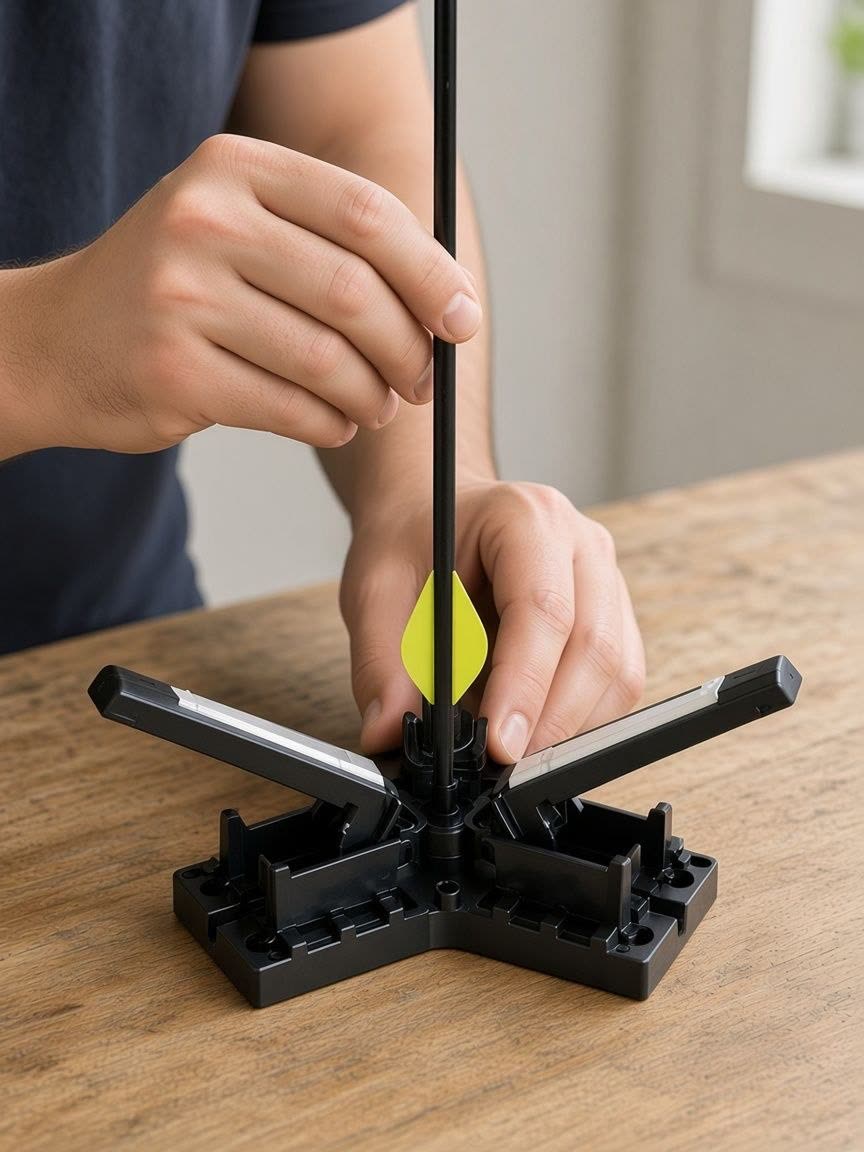
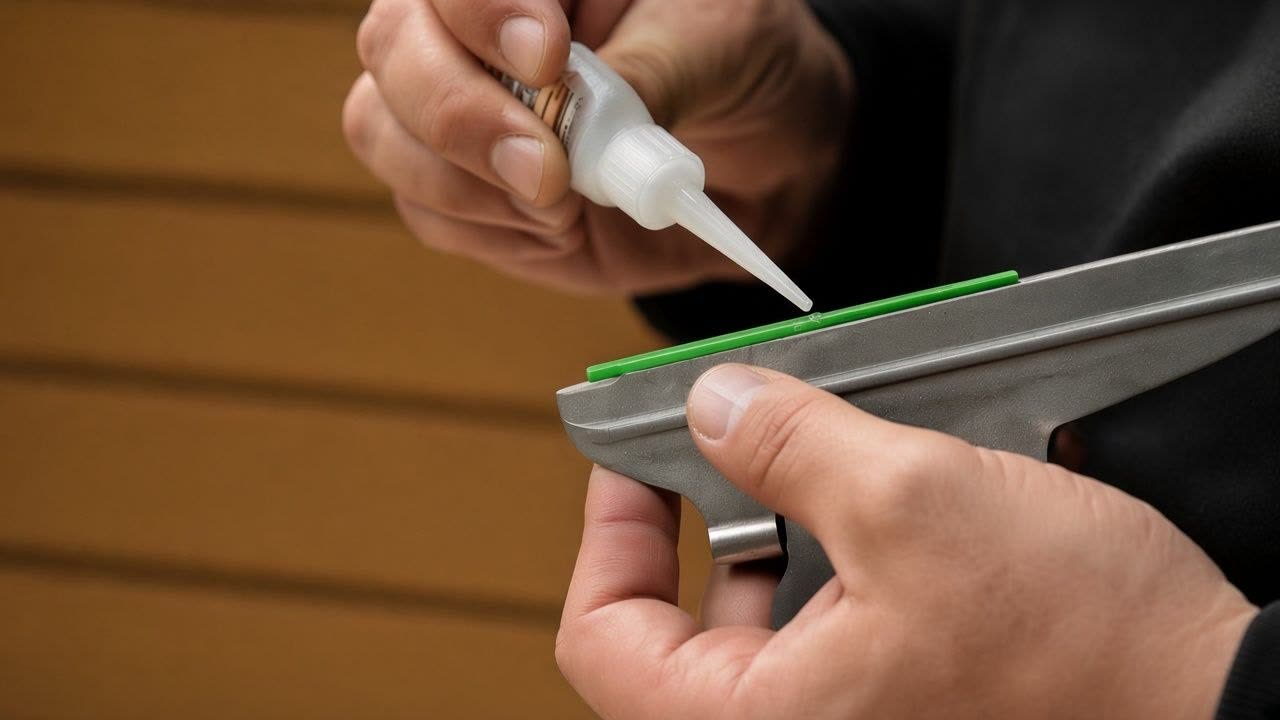
Each vane starts a short way in front of the nock. The exact spot depends on your bow, your rest, and your vane, so check the vane maker's guide. Then keep that gap the same on every arrow.
Go slow on the first arrow. Once it looks right, copy it on the rest and hold each one up against the first.
Now do the math. A dozen arrows with three vanes each is 36 vanes, and every one of them goes on alone and sits in the clamp until the glue sets. 1 Arrow Archery names the other risk. They say that with three or four separate vanes, "even small inconsistencies can create slight differences from one arrow to the next."
That can be a good night at the bench if you like building arrows. If you'd rather be shooting, there is another way.
How Do You Fletch Arrows Without A Jig?
You use a one-piece vane. It slides over the back of the shaft, so you have no separate vanes to space and line up. 1 Arrow Archery makes two of them, called 1VANE and 1WING. Their 1WING page says there is "no jig, no glue, and no cleanup required." Their homepage says, "Fletch 12 arrows in minutes."
Here are the install steps 1 Arrow Archery shares:
- Leave the nock in the arrow.
- Slide the 1VANE or 1WING onto the shaft and move it into place.
- If the fit is tight, use a little rubbing alcohol to help it slide.
- If it moves, add a small piece of double-sided Scotch tape or a tiny drop of glue.
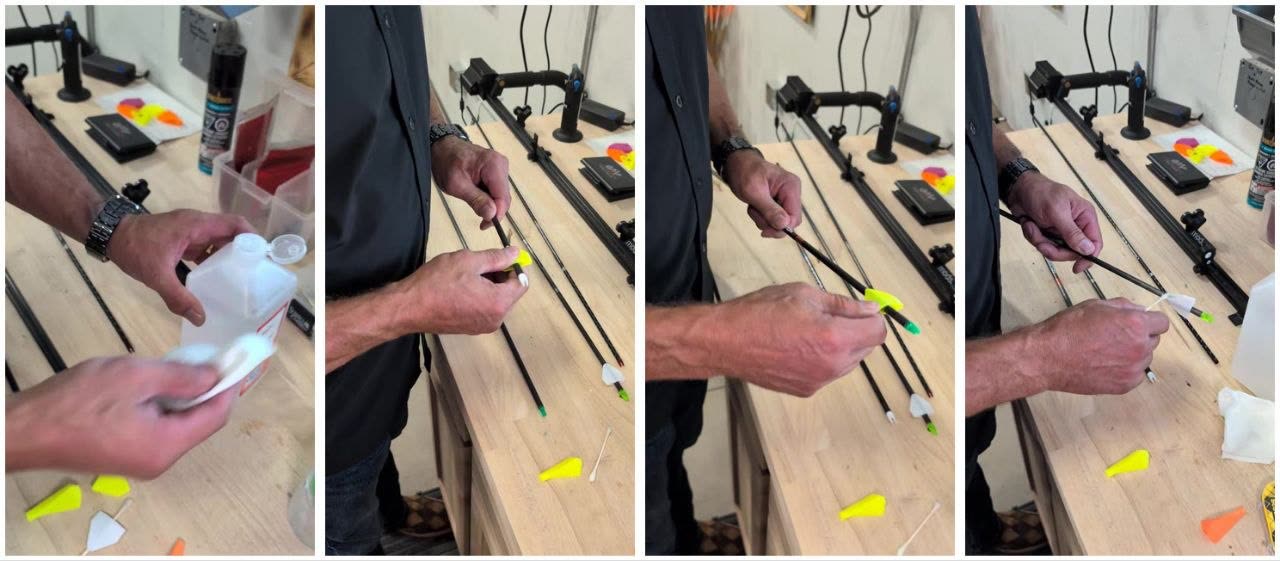
They also say to set 1VANE "point down" so it touches your rest less. Their video below shows the full install.
The step worth doing first is measuring your shaft. Micro fits shafts under 7.0 mm outside diameter, and Standard fits 7.0 mm and up. Use calipers on the bare shaft. Their FAQ also lists common shafts and the size that fits each one.
Which Should You Pick, 1VANE Or 1WING?
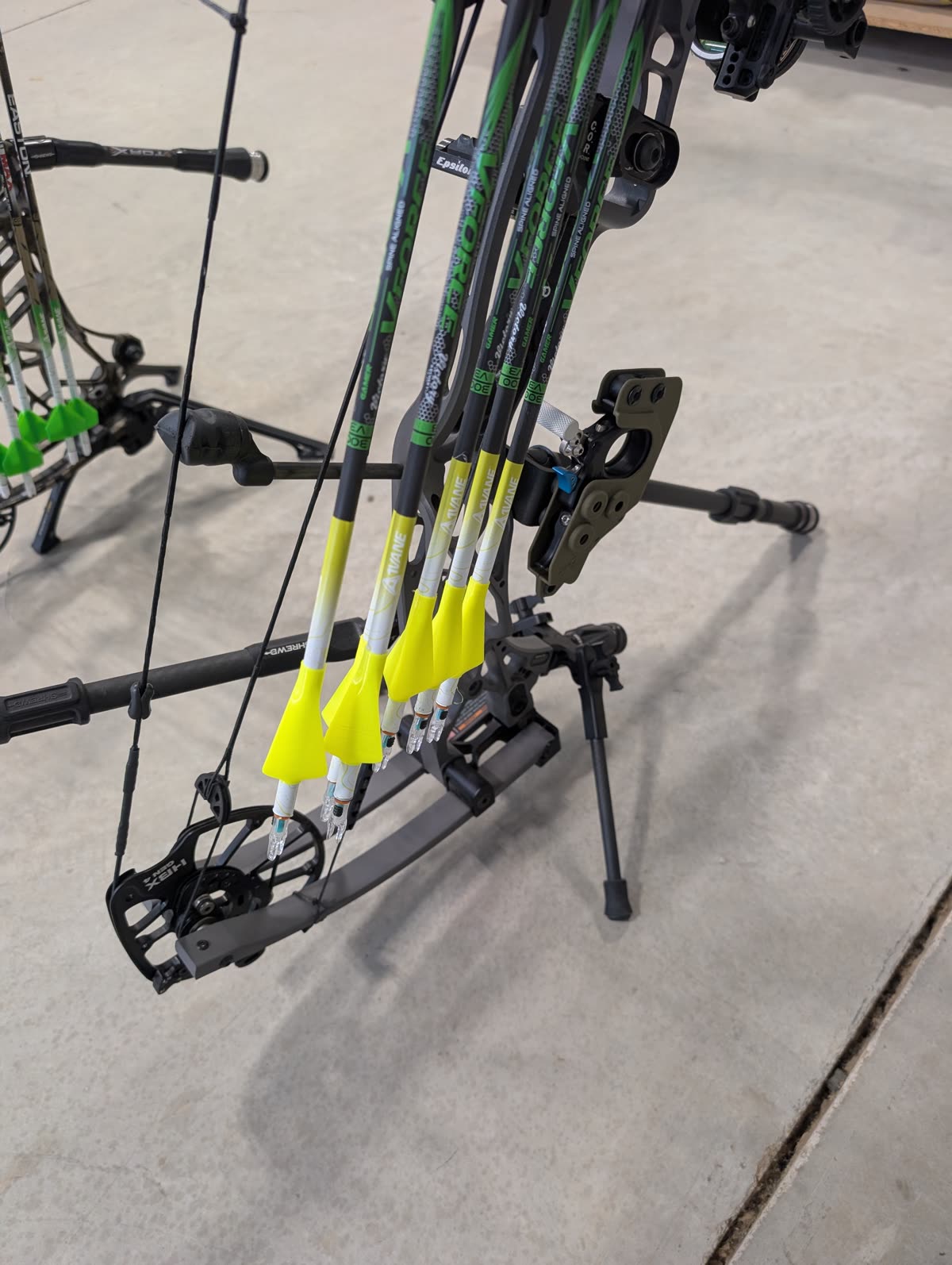
1 Arrow Archery designed 1Vane and 1Wing for different shooting priorities. The 1Vane was developed primarily for whitetail hunting, with an emphasis on acoustic performance and fast stabilization. The 1Wing was engineered for efficient arrow flight, long-range accuracy, 3D competition, and western hunting. Both can be used at a wide range of distances. The right choice depends more on what you're trying to accomplish than how far you're shooting.
| 1VANE | 1WING | |
|---|---|---|
| Best suited for | Whitetail hunting and applications prioritizing acoustic performance | Western hunting, 3D archery, target shooting, and long-range performance |
| Shooting distance | Works at a range of distances; optimized primarily for shorter- to mid-range hunting applications | Works at all distances; particularly advantageous for extended-range shooting |
| Primary design priority | Rapid stabilization and a sound profile developed with whitetail hunting in mind | Aerodynamic efficiency, rapid stabilization, and consistent downrange flight |
| Sound characteristics | Engineered with emphasis on frequencies relevant to whitetail deer hearing | Different acoustic profile; prioritizes downrange flight performance |
| Trajectory | Greater drag can contribute to additional arrow drop at longer distances | Designed for efficient flight and improved trajectory at longer distances |
| Company notes | Independently tested for acoustic performance, with particular emphasis on sound frequencies relevant to whitetail deer hearing. | Built for outdoor target, 3D, and hunters |
| Weight | 23 to 26 grains | 17 to 21 grains |
| Spin (company figure) | 5x a standard 3-fletch | 10x a conventional arrow |
| Price | US$29.99 per dozen in most colors | US$29.99 per dozen in most colors |
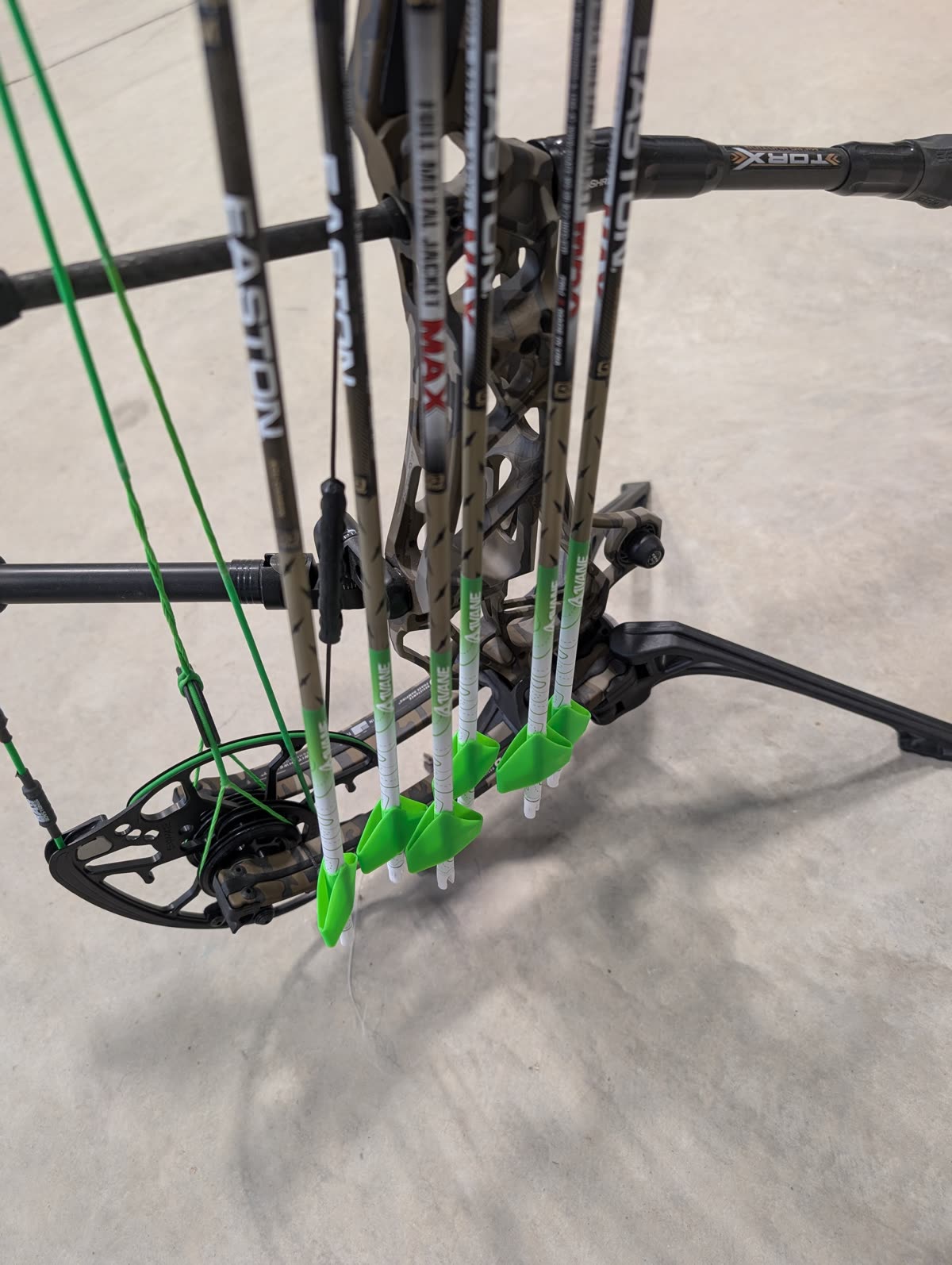
There is a trade, and they put it in writing. Their blog says "a small amount of speed is exchanged for faster stabilization." It also says faster spin "cannot correct a seriously mistuned bow." So they tell you to bare shaft tune out to 40 yards first. We like a company that tells you the cost up front.
Both 1Vane and 1Wing feature a left-helical design as standard, helping generate arrow rotation for rapid stabilization. Right-helical configurations are also available through special order. You can swap them on and off with ease. If you shoot both short and long, try each one on your own bow and keep the one that groups best.
Frequently Asked Questions
What Is The Best Glue For Arrow Fletching?
Use a glue made for your vanes and your shafts. Many archers use a fletching glue or a gel super glue, and gel is easier to control. Read the vane maker's label first, since some vanes need a certain glue or a primer. If a vane peels off after a few shots, the shaft was likely dirty.
How Do You Fletch Carbon Arrows?
You fletch them the same way you fletch aluminum ones. A clean shaft is what counts, so wipe the back with rubbing alcohol and let it dry. Some archers lightly scuff the carbon so the glue grips better, and a wrap gives the glue an even base.
How Do You Fletch 4 Vane Arrows?
You need a jig set up for four vanes. Each vane sits a quarter turn from the last, and many jigs can switch between three and four. Four smaller vanes are common on hunting arrows. 1 Arrow Archery says the open-vent 1WING works like a 4-fletch.
Should You Use Vanes Or Feathers?
Vanes are plastic, and they hold their shape in wet weather. Most people who shoot a compound bow use them. Feathers are natural, and most come from turkeys. They can flatten when wet and wear out faster, but a feather folds out of the way if it brushes the bow, so many traditional archers pick them.
Ready To Test Your New Arrows?
Fresh fletching needs a test session. Find an archery range near you on ARC, then shoot a few groups.
Want to try 1VANE or 1WING? Save 10% at 1 Arrow Archery with code ArcheryRangesUSA10.